Read More
India has emerged as one of the most promising destinations to invest in startups, driven by rapid digital growth and a large, young population. As per the Ministry of Commerce &...
Facilitate smooth share transfers in India with expert SPA drafting as per the Companies Act and SEBI norms. Get professional guidance for a secure, compliant, and timely transaction.
 Legally Compliant SPA DraftingDetailed Due Diligence SupportStamp Duty AssistanceEnd-to-end Deal ManagementPost-execution Compliance Guidance
A Share Purchase Agreement (SPA) is a legally binding contract used when buying or selling shares of a company. It clearly outlines the obligations and expectations of each party.
The SPA typically covers:
By signing the SPA, both the buyer and the seller are agreeing to the terms laid out in the agreement, which protects both sides and ensures a smooth and lawful transaction. It helps avoid any misunderstandings or disputes after the deal is made, as everything is documented in detail.
A Share Purchase Agreement is crucial for several reasons:
Ultimately, a well-drafted SPA transforms a potentially risky transaction into a secure, transparent, and legally enforceable process.
Several important Indian la Indian Contract Act, 1872: ws govern Share Purchase Agreements (SPAs), ensuring compliance and enforceability:
The process of buying or selling shares involves several key steps. Each step is important for a successful transaction. Understanding these steps helps navigate the complexities.
The process often begins with an LOI or Term Sheet, a preliminary, non-binding document that outlines the main points of the deal. It shows a serious intention to proceed. LOI typically covers the proposed price and key conditions. This step sets the stage for detailed negotiations. It helps to ensure both parties are on the same page initially.
Due diligence is a detailed investigation carried out by the buyer.
Due diligence is vital for making informed decisions and minimizing future issues. It also ensures compliance with regulatory requirements for listed companies.
After completing due diligence, the parties negotiate the specific terms of the SPA. Lawyers then draft a detailed agreement that reflects these negotiations and the findings from the due diligence review. This stage often involves several revisions to create a mutually acceptable agreement.
For companies, board approval is usually necessary. The company's board of directors must pass resolutions. These resolutions authorize the share sale or purchase. This step ensures internal compliance. It also confirms the legal authority of the signatories. This is a vital corporate governance requirement.
After final negotiations, the SPA is executed. Both the buyer and seller sign the agreement. This makes the contract legally binding. Pre-closing actions follow execution. These actions ensure all conditions are met before the final transfer. This might involve obtaining regulatory approvals. It could also include settling any outstanding issues.
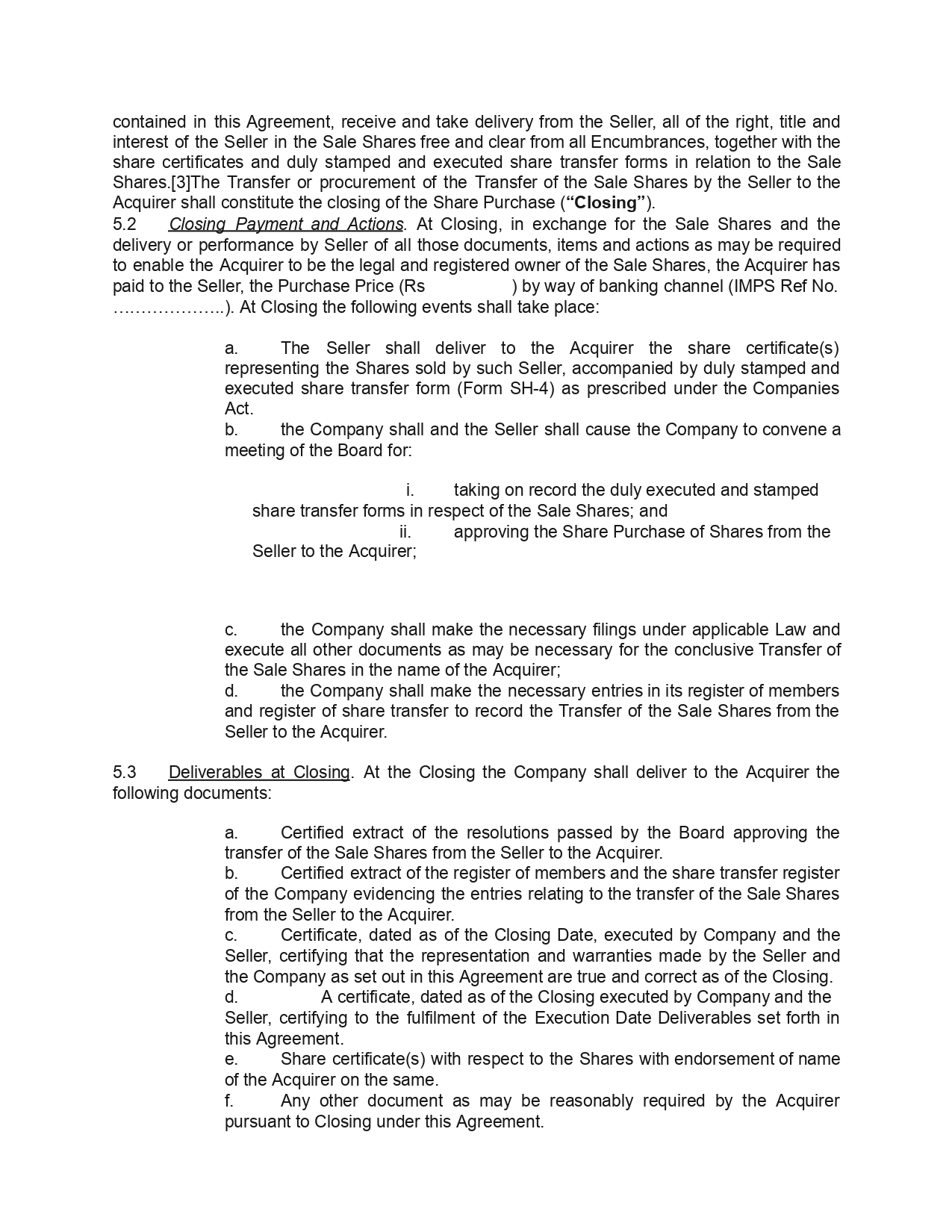
The closing day is when the actual transfer of shares takes place. The seller transfers the shares to the buyer. For physical shares, this is done through a share transfer form (SH-4), and for dematerialized (demat) shares, transfer instructions are given electronically.
In return, the buyer pays the agreed purchase price, and this is often done simultaneously. Share certificates are handed over for physical shares, while for dematerialized shares, the transfer is recorded electronically. All necessary documents are exchanged to complete the transaction.
After the closing day, there are a few post-closing formalities that need to be completed. The share transfer must be recorded in the company’s official records, which includes updating the shareholder register. Necessary forms, such as Form SH-4 for physical share transfers or Form SH-6 for share transmissions, need to be filed with the Registrar of Companies (RoC).
This ensures that the change in ownership is officially recognized and registered. Compliance with all legal requirements is crucial at this stage to finalize the transaction and make the share transfer legally binding.
A Share Purchase Agreement contains specific clauses, each addressing a different aspect of the transaction, and understanding these clauses is key to ensuring a smooth and legally sound deal.
To prevent any ambiguity, the SPA begins by clearly identifying all parties involved: the buyer, the seller, and the target company. Full legal names and addresses are typically included. This ensures there is no confusion about who is involved.
The preamble, or recitals, sets the stage for the agreement by explaining the context and the reasons why the parties are entering into the SPA. It helps in interpreting the rest of the document.
This section defines key terms used in the agreement. It ensures consistency and clarity. Words like "shares," "purchase price," or "closing date" are defined. This avoids ambiguity. It makes the document easier to understand.
This is the core clause of the SPA. It explicitly states that the seller agrees to sell. It also states that the buyer agrees to purchase the shares. The number and type of shares are specified here. It establishes the transaction's subject matter.
This clause details the financial aspects. It specifies the total purchase price for the shares. It also outlines the payment method. This could be a lump sum or installments. Any adjustments to the price are also mentioned. This is a critical commercial term.
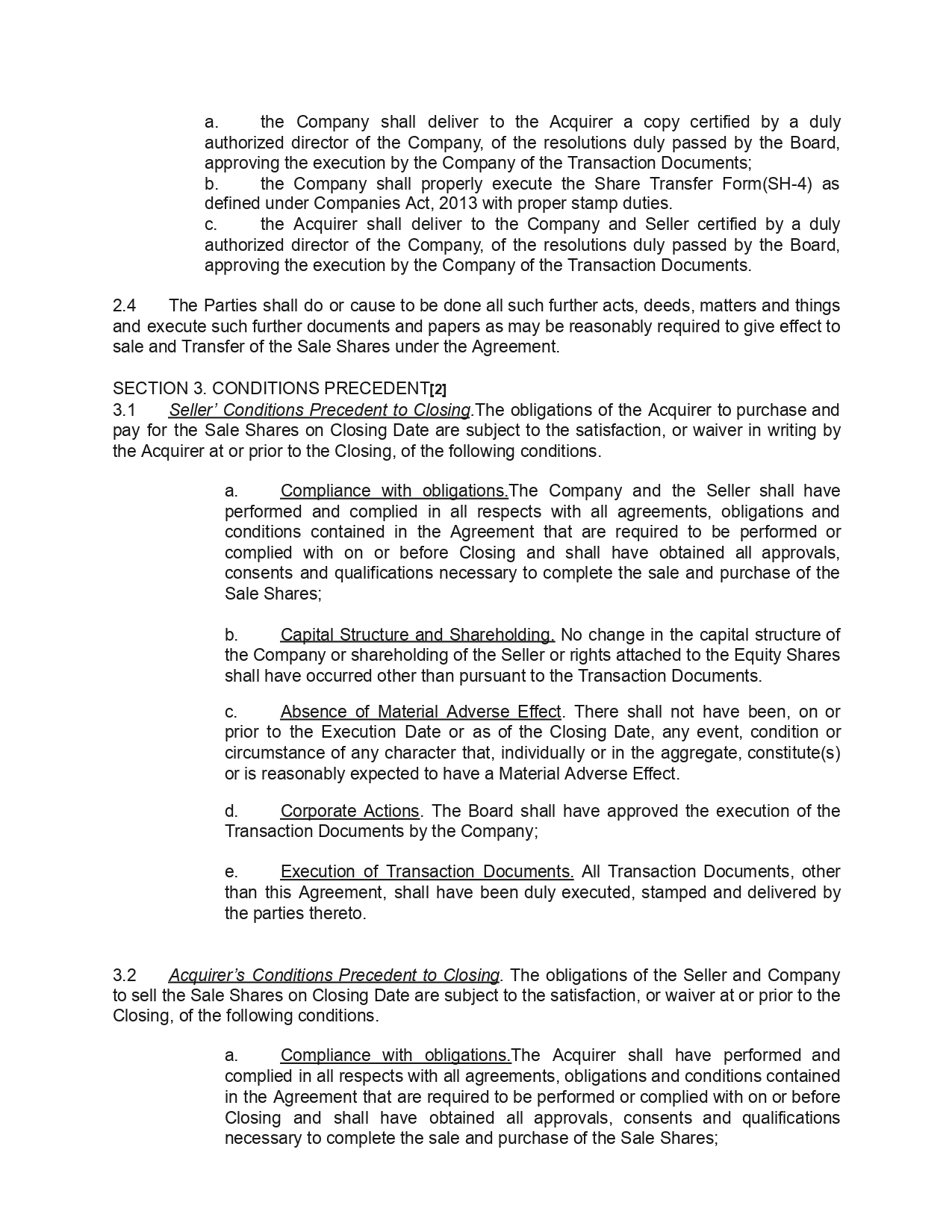
Conditions precedent are requirements that must be met. These must be fulfilled before the transaction can close. Examples include regulatory approvals or specific financial conditions. If these conditions are not met, the deal may not proceed. They act as safeguards for both parties.
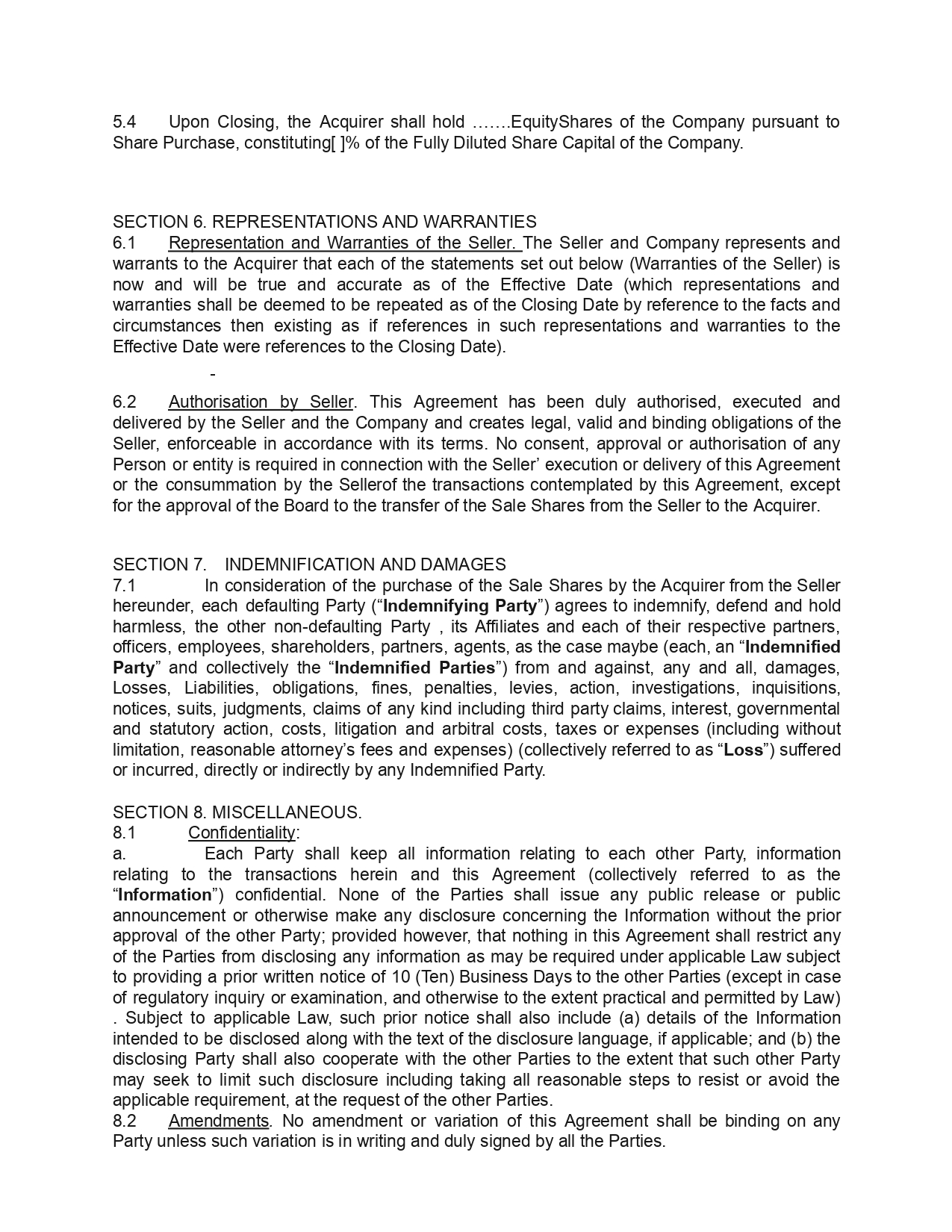
Representations are statements of fact. Warranties are promises made by one party to another. These relate to the target company's status. They cover its financial health, assets, and liabilities. If a representation or warranty is false, it can lead to claims. This clause is a cornerstone of protection for the buyer. It reduces information asymmetry.
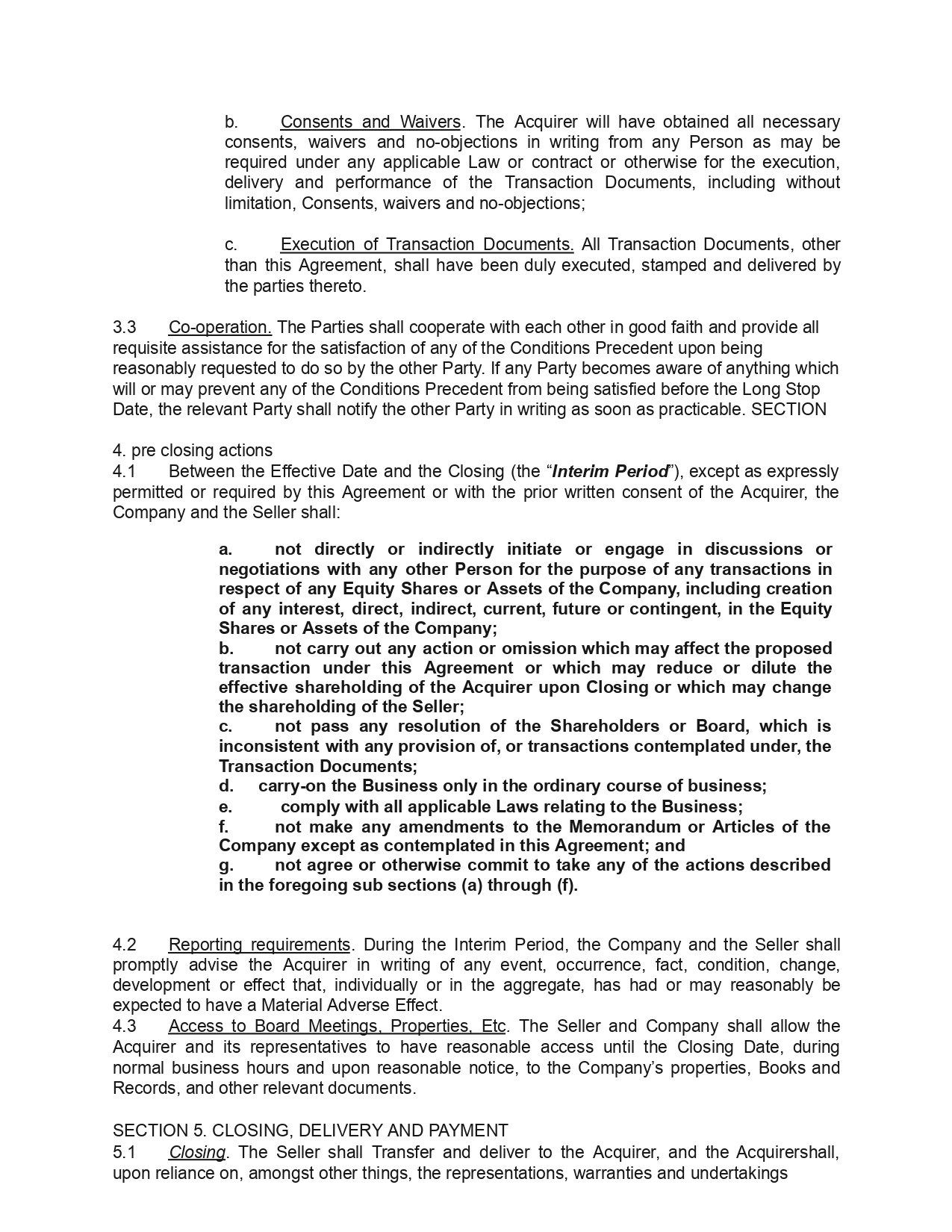
This section outlines how the target company should operate. It covers the period between signing and closing. It prevents the seller from making major changes. These changes could negatively impact the company's value. It ensures business continuity.
Indemnification clauses protect parties from losses. If one party breaches the SPA, they must compensate the other. This covers damages or liabilities incurred due to a breach. It provides financial security. It outlines the limits of liability.
Confidentiality clauses prevent disclosure of sensitive information. Parties agree not to share proprietary data. This protects trade secrets and business strategies. This is especially important during due diligence. It ensures business secrets remain private.
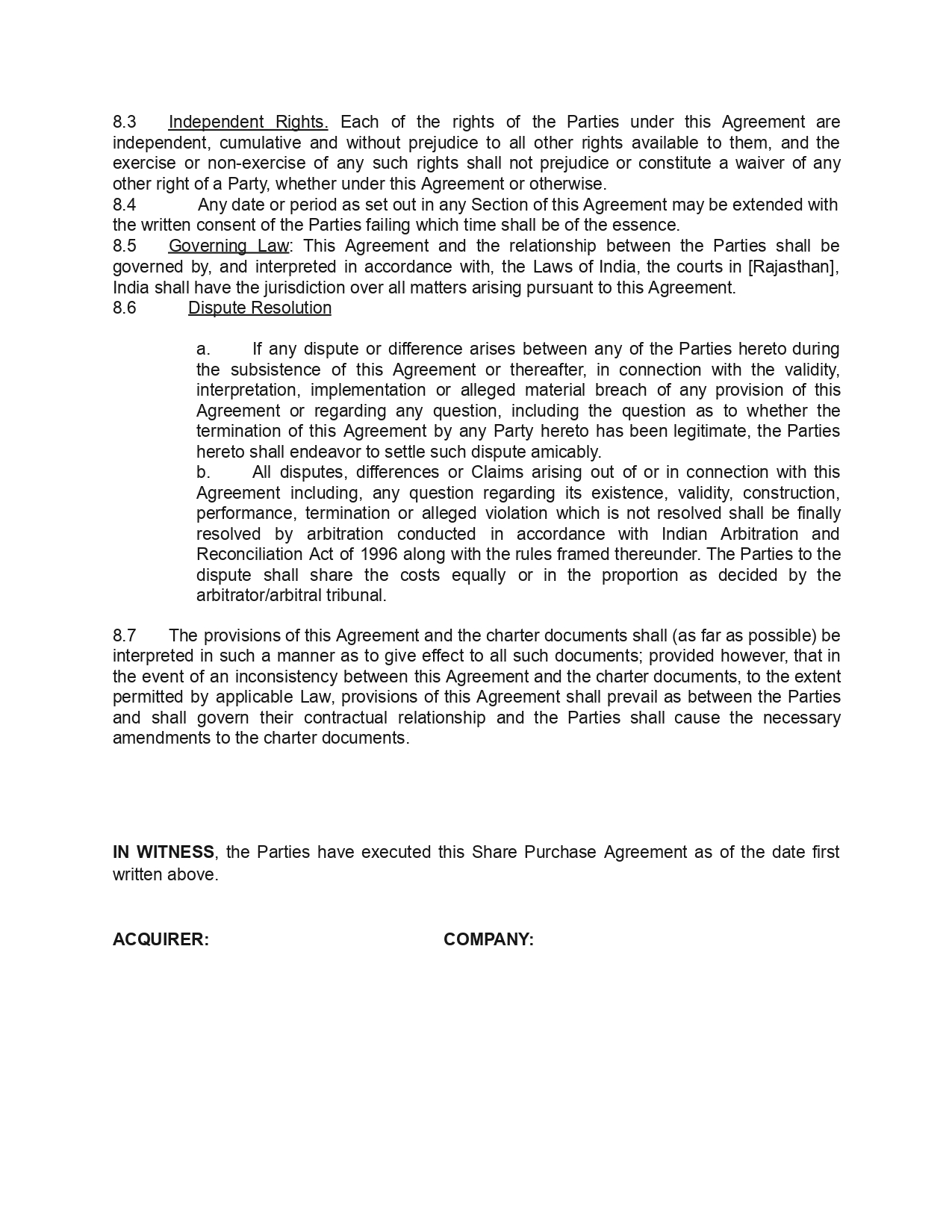
This clause specifies the law that governs the agreement. For SPAs in India, Indian law is typically chosen. It also outlines how disputes will be resolved. This could be through arbitration or court litigation. It provides a framework for addressing conflicts. It offers clarity on legal jurisdiction.
Stamp duty is an important financial consideration. It is a tax levied on certain documents under the Indian Stamp Act, 1899 (as amended), which varies by state. Share transfers are among these.
Stamp duty is a tax imposed by the government. It is levied on documents that create or transfer rights. For share purchase agreements, it validates the transaction. It makes the document legally enforceable in court. Without proper stamp duty, the agreement may not be admissible as evidence. It is a mandatory requirement for legal recognition.
The calculation of stamp duty can vary based on the type of shares and the transaction value. It also depends on the transaction value. Generally, it's a percentage of the consideration. This could be the market value or the agreed price. Specific rules apply to physical versus demat shares. Expert advice is often helpful here.
| Transaction Type | Applicable Stamp Duty Rate | Who Pays? | Collection Process |
| Transfer of Shares | 0.015% of the transaction value | Buyer (Transferee) | Demat: Automatically collected by stock exchanges/clearing corporations or depositories (NSDL/CDSL). Physical: Paid via share transfer stamps or e-stamping on the share transfer deed. |
| Issuance of Shares | 0.005% of the issue price | Issuer (Company) | Demat: Collected by the depository.
Physical: Paid via franking, e-stamping, or adhesive stamps on the share certificate. |
It’s important to understand the distinct roles these agreements play in corporate transactions, as each serves a different purpose.
| Aspect | Share Purchase Agreement (SPA) | Shareholders' Agreement | Asset Purchase Agreement |
| Purpose | Transfers ownership of shares in a company. | Governs the relationship between existing shareholders. | Involves selling specific assets, not shares. |
| Focus | Buying or selling a stake in a company. | Regulates the rights and obligations of shareholders. | Sells assets like property, machinery, or intellectual property. |
| Impact on Company | The company remains intact; only the ownership of shares changes. | Does not affect company ownership, just the relationships between shareholders. | The company continues to exist; it retains assets and liabilities that are not sold. |
| Assets and Liabilities | The company retains its assets and liabilities. | Does not involve assets or liabilities of the company. | Specific assets and related liabilities are transferred. |
| Shareholder Involvement | Involves the transfer of shares to a new owner. | Focuses on existing shareholders and their interaction. | Does not involve shareholders directly, but affects the company's assets. |
| Common Use | Common for the sale of a company or buying a stake in a company. | Common for ongoing operations and governance of a company. | Common for acquiring business divisions or selling business assets. |
| Legal Structure | Requires formal documentation on the sale and purchase of shares. | Primarily governs the internal dynamics of the company. | Formal documentation on the sale of assets. |
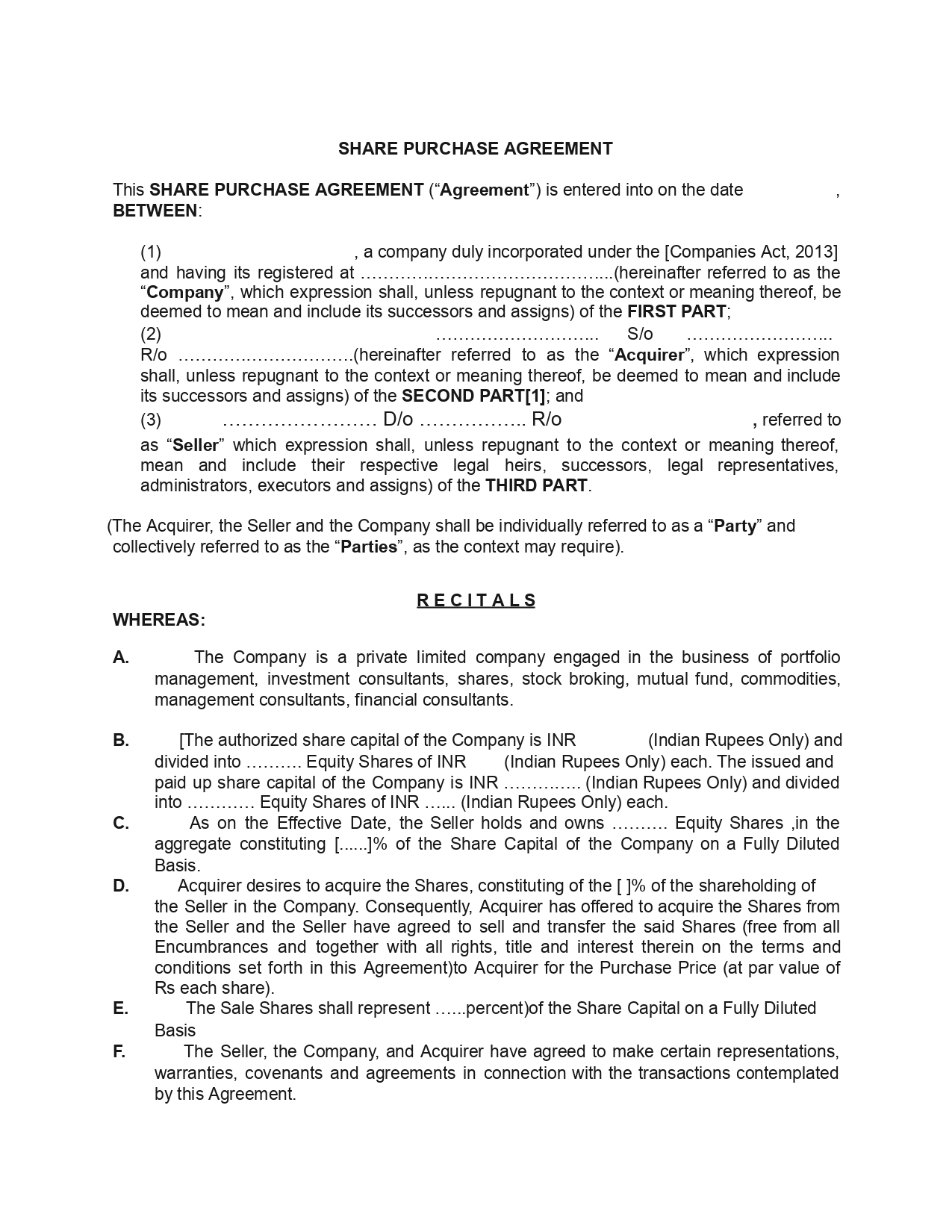
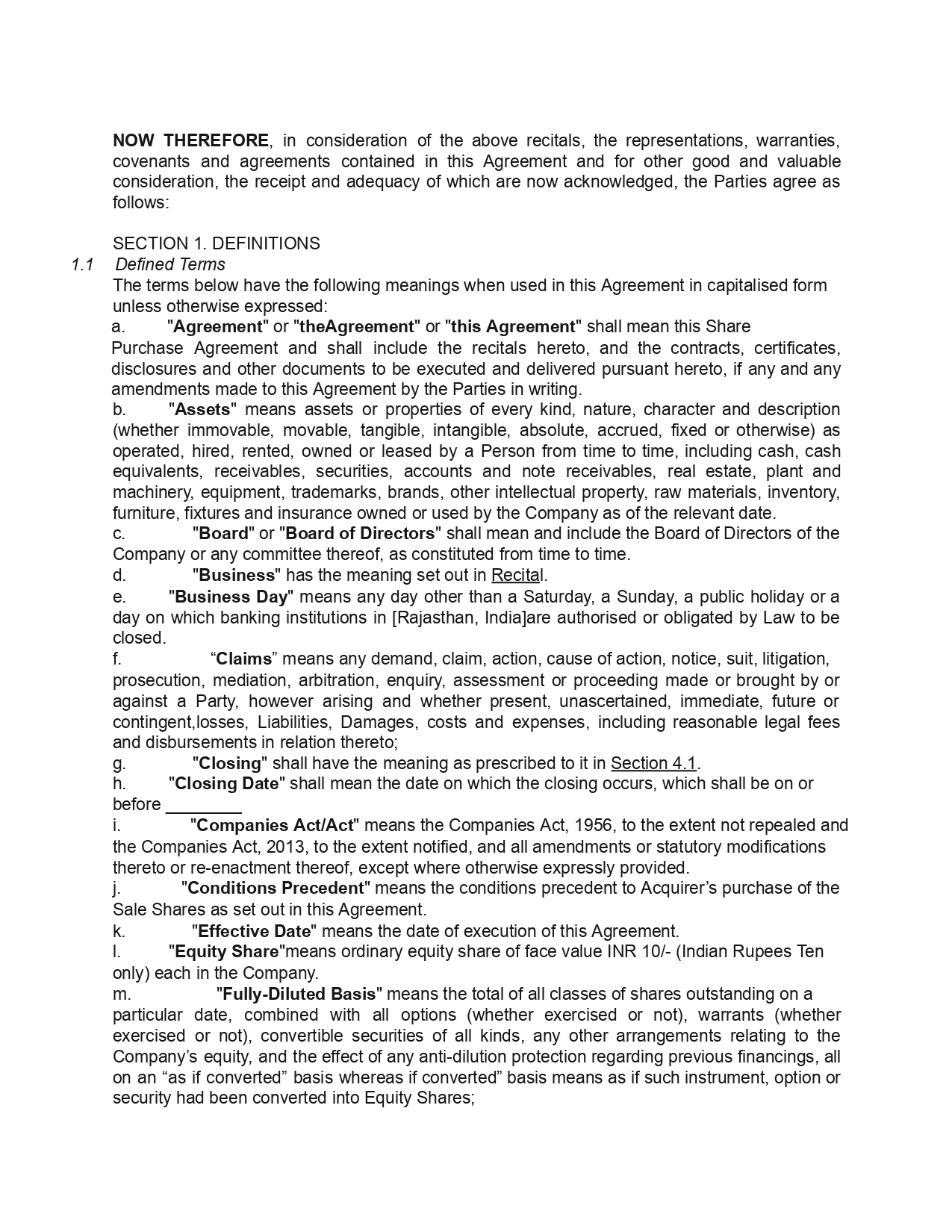
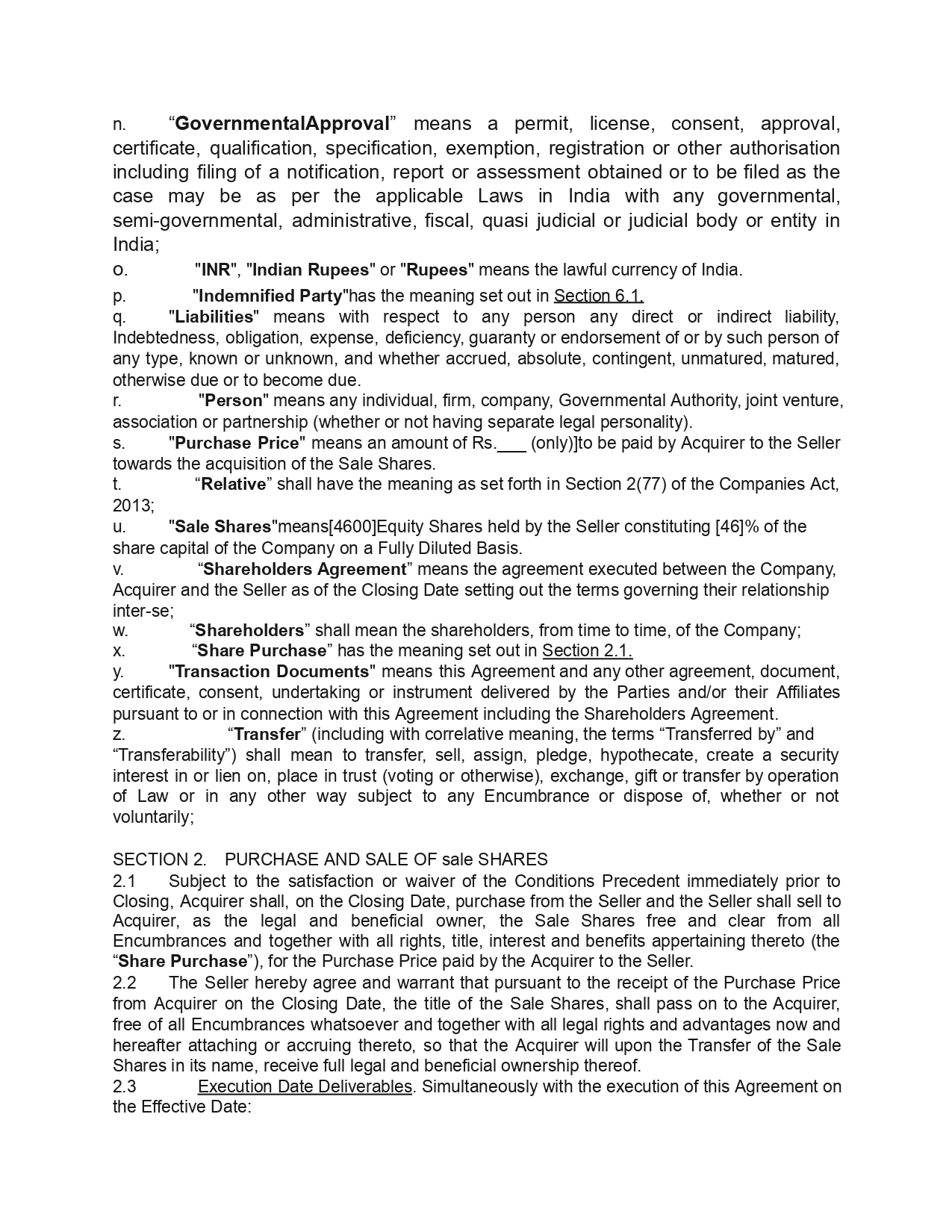
A well-crafted Share Purchase Agreement (SPA) template is a foundational tool that ensures all essential terms and conditions are meticulously included, providing a clear and enforceable framework for the entire transaction. By using a comprehensive template, parties can methodically address crucial elements like the number of shares being sold, the purchase price, and the representations and warranties from both sides.
This structured approach not only saves time but also significantly reduces the risk of legal loopholes and future disputes by making sure no critical details are overlooked.
Connect with Startupease and let our experts handle
the legal hassle while you grow your business.