Read More
India has emerged as one of the most promising destinations to invest in startups, driven by rapid digital growth and a large, young population. As per the Ministry of Commerce &...
The issue of shares is essential for raising capital and expanding ownership. Get expert support from Startupease for legal drafting, ROC compliance, and seamless online share allotment.
 Online Process for Share Issuance & AllotmentExpert Drafting of Resolutions & Share CertificatesROC Filing with PAS-3 & MGT-14 ComplianceFast Capital Raising & Investor OnboardingEnd-to-End Support for Private Limited Companies
The issue of shares is the process through which a company raises capital by offering ownership units called shares to investors. These shares represent a claim on the company’s assets and earnings. When a company issues shares, it essentially sells a portion of itself to raise funds for business activities like expansion, product development, or debt repayment.
Companies can issue shares to the public (in a public offering) or privately to specific investors. There are different types of share issues—such as equity shares, preference shares, and rights issues—depending on the company's needs and the structure of the offer. Each type comes with its own set of rights, responsibilities, and financial implications for both the issuer and the shareholder.
Companies primarily issue shares for several key reasons:
In India, as per the Companies Act, 2013, companies typically issue two main types of shares: equity shares and preference shares.
Equity shares represent the fundamental ownership of a company. Equity shareholders are the true owners, and they have voting rights in company decisions, including electing the board of directors. They share in the company's profits (through dividends) and its losses.
Equity shares offer high return potential when the company does well, but also carry the highest risk, as shareholders are the last to be paid if the company is liquidated. These shares can also be issued in different classes, such as with or without differential voting rights (DVRs), as permitted under Rule 4 of the Companies (Share Capital and Debentures) Rules, 2014.
Preference shares offer certain preferential rights over equity shares. These typically include:
Issuing preference shares is a smart way for companies to raise funds without giving up control, while offering investors more predictable returns. In India, only redeemable preference shares are permitted under Section 55 of the Companies Act, 2013, meaning the company must repay them after a certain period.
Let's quickly compare equity and preference shares:
| Feature | Equity Shares | Preference Shares |
| Ownership Rights | Carry voting rights and ownership control | Generally, no voting rights (except in special circumstances) |
| Dividend | Paid after preference shareholders and may vary | Fixed dividend paid before equity shareholders |
| Risk Level | Higher risk due to variable returns | Lower risk due to fixed income and priority in payments |
| Priority in Repayment | Last priority in case of liquidation | Priority over equity in repayment of capital during liquidation |
| Control in Management | Shareholders have decision-making power | Usually, no control or influence over management, except in matters affecting their rights or when dividends are unpaid for two or more years |
| Convertibility | Not convertible unless specifically issued as convertible equity | May be issued as convertible into equity shares |
| Suitable For | Investors seeking growth and capital appreciation | Investors seeking stable and fixed income |
Companies have various methods of issuing shares to raise capital, each suited for different situations and company types. These procedures are governed by the Companies Act, 2013, and SEBI regulations for listed companies.
This approach allows companies to offer shares to the general public and is regulated by the SEBI (Issue of Capital and Disclosure Requirements) Regulations, 2018, commonly known as the SEBI ICDR Regulations.
This method involves offering shares to a select group of identified persons (not the general public) through a private offer letter.
A rights issue allows existing shareholders to buy additional shares proportionate to their current holdings. Listed companies must comply with SEBI (LODR) Regulations for this process.
A bonus issue involves allotting additional shares to existing shareholders free of cost, based on their current shareholding.
A rights issue lets companies raise funds by offering existing shareholders discounted shares based on their current holdings. It’s governed by Section 62(1)(a) of the Companies Act, 2013, and SEBI ICDR Regulations for listed firms.
Companies primarily use a rights issue because:
The difference between rights issues and bonus shares is as follows:
| Feature | Rights Issue of Shares | Bonus Shares |
| Definition | New shares are offered to existing shareholders at a discounted price | Free shares issued to existing shareholders from the company's reserves |
| Consideration | Shareholders pay to subscribe to new shares | Shares are issued free of cost |
| Purpose | To raise additional capital for business needs | To capitalise the company's accumulated profits |
| Impact on Share Capital | Increases both share capital and cash reserves | Increases share capital but reduces reserves |
| Impact on Ownership | Ownership remains proportional if rights are exercised | Ownership remains unchanged |
| Regulatory Requirement | Requires an issue offer, a letter of offer, and compliance with SEBI norms | Requires board and shareholder approval under the Companies Act |
| Investor's Choice | Shareholders can accept, renounce, or ignore the offer | Automatically allotted based on existing shareholding |
The right issue of shares process under Section 62 of the Companies Act, 2013, involves several distinct steps to ensure compliance and fairness.
The offer period, during which shareholders can accept the offer, must be open for a minimum of 15 days and a maximum of 30 days from the date of the offer letter. For certain specified IFSC public companies, a shorter period may apply if 90% of members consent.
Public companies must file Form MGT-14 with the ROC within 30 days of passing the special resolution for the rights issue. This form notifies the ROC about the special resolution passed by the board.
When a company issues shares, existing shareholders receive the option to buy new shares. However, they don't have to exercise this option themselves. They can 'renounce' their right in favour of another person (or multiple persons).
This means shareholders can choose to give up their right to buy new shares, either fully or partially, letting others subscribe in their place. This renunciation offers flexibility to those who don’t want to invest more but wish to gain value from their rights. For listed companies, this renunciation happens by trading “Rights Entitlements” (RE) on the stock exchange during a set period.'
For a smooth right issue of shares, companies need to prepare and file specific documents and forms:
A bonus issue of shares involves a company distributing additional shares to its existing shareholders without cost. The company converts its reserves (like accumulated profits) into share capital.
Companies typically opt for a bonus issue when:
The procedure for the issue of bonus shares is governed by Section 63 of the Companies Act, 2013, and certain rules:
| Aspect | Details |
| Governing Law | Companies Act, 2013 and SEBI (Issue of Capital and Disclosure Requirements) Regulations |
| Approval from the Board | Requires approval from the Board of Directors through an ordinary resolution |
| Authorised Capital Check | Bonus issue must be within the authorised share capital; if not, capital must be increased |
| Fully Paid-up Shares | Bonus shares can only be issued to holders of fully paid-up equity shares |
| No Default Condition | The company must not have defaulted on payments of interest or principal on fixed deposits or debt |
| Time Frame for Allotment | Bonus shares must be issued within 15 days of shareholder approval (if no regulatory approval is needed) |
| Permitted Sources | - Free reserves- Securities premium account- Capital redemption reserve |
| Not Allowed From | - Revaluation reserves- Unrealised gains or profits- Reserves created from asset sale |
The issue of bonus shares is a clear and regulated process that companies follow to distribute shares free of cost to existing shareholders, typically by capitalising reserves.
Private placement is a method of issuing securities (shares, debentures, etc.) to a select group of identified persons, rather than the general public. Compared to a public issue, it's a faster and less cumbersome way for companies to raise capital.
A private placement can be offered to specific individuals or groups chosen by the Board of Directors, but not to the general public. It is limited to a maximum of 200 identified persons per financial year for each type of security, excluding Qualified Institutional Buyers (QIBs) and employees under ESOP schemes. This typically includes:
Private Placement under the Companies Act, 2013 (Section 42) is subject to strict rules to prevent misuse:
The procedure for a private placement is precise and must be followed carefully to ensure legal compliance under Section 42 of the Companies Act, 2013.
This allotment must be completed within 60 days of receiving the application money. If shares are not allotted within this period, the application money must be refunded within the subsequent 15 days, failing which it attracts interest.
The 200-investor limit is a cornerstone rule for private placements under the Companies Act, 2013. A company cannot make an offer or invitation for private placement to more than 200 identified persons in a single financial year. This limit applies to each kind of security separately (e.g., 200 for equity shares, 200 for debentures).
This limit excludes offers to Qualified Institutional Buyers (QIBs) and employees subscribing under Employee Stock Option Plans (ESOPs).
Other vital conditions include:
Additional requirements include obtaining consent letters from allottees and submitting a valuation report when shares are issued at a premium or to non-residents under FEMA.
The company must also provide a list of allottees along with their PAN and Demat details.
An Employee Stock Option Plan (ESOP) is a popular incentive scheme used by companies, particularly startups and growing businesses, to reward and retain employees. Under an ESOP, employees are granted the "option" (but not the obligation) to buy a certain number of the company's shares at a pre-determined price (the "exercise price") on a future date.
This allows employees to participate in the company's growth; if the share price increases, they can exercise their options, buy shares at the lower exercise price, and potentially sell them for a profit.
Implementing an ESOP scheme involves careful planning and adherence to regulations for a private limited company.
| Step | Description |
| 1. Board Approval | Conduct a board meeting to approve the draft ESOP scheme and call for an EGM (Extraordinary General Meeting). |
| 2. Draft ESOP Policy | Prepare the ESOP scheme document outlining eligibility, vesting schedule, exercise price, and terms. |
| 3. Shareholder Approval | Pass a special resolution in the EGM to approve the ESOP scheme under Section 62(1)(b) of the Companies Act. |
| 4. Amend Articles of Association | If required, modify the AoA to authorise the issue of ESOPs and reflect the scheme details. |
| 5. Valuation of Shares | Get shares valued by a registered valuer to determine the fair market value for ESOP allotment. |
| 6. Grant of Options | Issue grant letters to eligible employees specifying the number of options, vesting schedule, and terms. |
| 7. Vesting and Exercise | Allow employees to vest their options over time and exercise them at the predetermined price. |
| 8. Allotment and ROC Filing | On exercise, allot equity shares and file Form PAS-3 with the Registrar of Companies (ROC). |
| 9. Maintain ESOP Register | Record all grants, vesting, and exercises in the ESOP register as per regulatory requirements. |
Strict compliance with legal and regulatory frameworks is critical for any share issue. Following regulations ensures the process is valid and prevents future complications.
This legislation and regulatory framework set the foundation and detailed rules for all share issuance activities in India.
Obtaining the necessary approvals from the board and shareholders is a crucial step to ensure the legitimacy of the share issue.
Issuance and proper recording of share ownership complete the share issue process.
Despite clear procedures, the issue of shares can face several pitfalls. Being aware of these helps in proactive risk management.
The complex legal, financial, and procedural aspects of an issue of shares require specialised knowledge. Companies lacking in-house expertise may struggle to navigate the process effectively, leading to errors or delays. This underscores why expert guidance for corporate accounting issues of shares is vital.
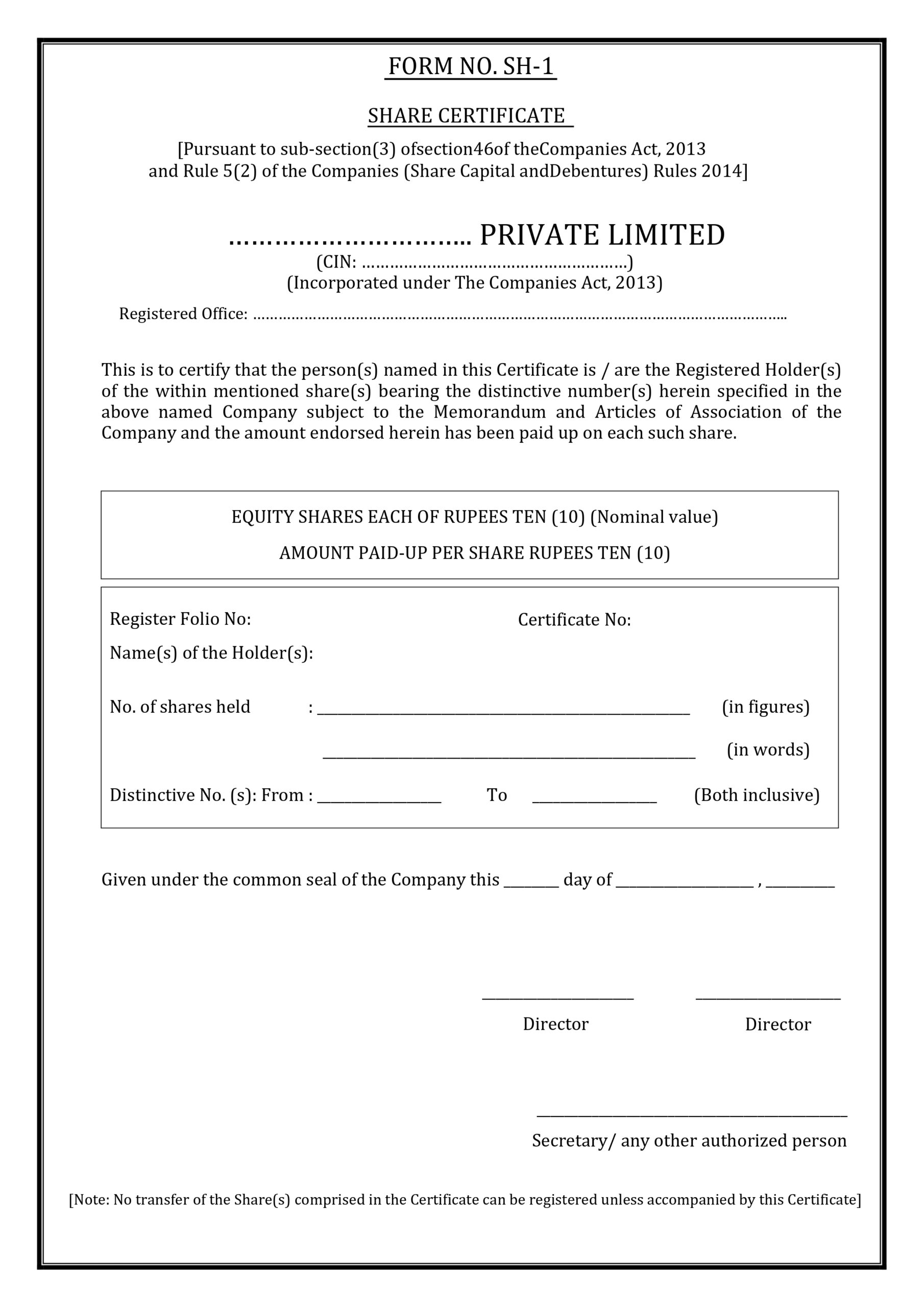

A Share Allotment Certificate is an official document issued by a company to confirm that specific shares have been allotted to a particular individual or entity. It acts as proof of ownership and is issued after proper board approval and ROC compliance.
The certificate includes critical details like the shareholder's name, number of shares, face value, and share certificate number. It is a legally recognised document under the Companies Act and must be maintained in the company's records.
Share allotment certificates can now be processed and delivered digitally, simplifying compliance and record-keeping. Once your allotment is processed and filed with the ROC, the certificate is prepared and issued to shareholders in PDF format.
To download your share allotment certificate:
To check the status:
If any issue arises, consult your company secretary or legal advisor for clarification.
Connect with Startupease and let our experts handle
the legal hassle while you grow your business.