Read More
India has emerged as one of the most promising destinations to invest in startups, driven by rapid digital growth and a large, young population. As per the Ministry of Commerce &...
Apply for your Legal Heir Certificate online with expert guidance. Ensure smooth inheritance process and avoid legal hassles with Startupease’s trusted documentation support.
 Application Filing AssistanceError-Free DocumentationQuick Status TrackingJurisdiction & Legal GuidanceTrusted by 20,000+ Businesses
A Legal Heir Certificate is an official document issued by the government that identifies the rightful living successors of a deceased person. It is similar to a formal introduction to the authorities, stating who is next in line to inherit the deceased's assets, liabilities, and responsibilities.
When a person passes away without leaving a will (this is known as dying 'intestate'), this certificate becomes vital. It establishes the relationship between the deceased and their legal heirs, paving the way for the transfer of property, bank balances, and other assets. The certificate is issued after a proper inquiry by the concerned government authorities, such as the Tehsildar or Talukdar (Sub-Divisional Magistrate – SDM) of the district.
The law in India defines who is considered a legal heir based on the deceased person's religion. The rules of succession are governed by personal laws.
For Hindus, Buddhists, Jains, and Sikhs, the Hindu Succession Act, 1956, applies. The legal heirs are categorized into classes:
For Christians, the Indian Succession Act, 1925, governs the distribution of property. Generally, the spouse and children are the primary heirs. If there are no children, the spouse may share the assets with other relatives of the deceased, like the father or mother.
For Muslims, succession is governed by their law, which has its own distinct rules for identifying heirs and their respective shares. Islamic law defines specific shares for heirs (known as Sharers and Residuaries), which include the spouse, children, and parents. The distribution is based on a pre-defined framework within Sharia.
Note: Personal succession laws are complex. It is always advisable to consult a legal expert for specific cases.
A Legal Heir Certificate is crucial after the death of a loved one. It legally proves who the rightful successors are and helps in managing the person's financial and legal matters smoothly.
Here’s why it’s important and how it helps:
In short, this certificate is not just a formality; it protects your rights, speeds up asset transfers, and prevents legal complications.
The issuance of a Legal Heir Certificate is primarily a state-level process, and the procedures may vary slightly from one state to another. There is no single central law governing its issuance. Instead, state revenue authorities issue the certificate based on applicable personal succession laws such as the Hindu Succession Law, Muslim Personal Law, or the Indian Succession Act, 1925 (for Christians and Parsis), and relevant state-specific rules.
The certificate is generally issued by the Revenue Department of the respective state. Key authorities involved in the process include the District Collector, Tehsildar, Talukdar, or Sub-Divisional Magistrate (SDM). Their role is to verify the legal heir claims through a proper inquiry before approving and issuing the certificate.
Many people get confused between a Legal Heir Certificate and a Succession Certificate. While both are related to inheritance, they serve different purposes and are issued by different authorities.
Here’s a simple breakdown of the differences:
| Feature | Legal Heir Certificate | Succession Certificate |
| Purpose | To identify the legal heirs of the deceased. | To grant authority to the holder to inherit the debts and securities of the deceased. |
| Issuing Authority | Issued by the Revenue Authority (Tehsildar/Talukdar/District Collector). | Issued by a Civil Court. |
| Scope | Establishes the relationship for inheriting property and claiming benefits. | Specifically deals with movable assets like stocks, bonds, and bank deposits. |
| When Required | For claiming pensions, insurance, and transferring properties and utilities. | For realizing the debts and securities of the deceased. |
| Legal Standing | It is a primary document for most inheritance claims. | It provides greater legal authority for dealing with financial assets. |
| Cost | The fees are nominal, usually a small stamp fee and affidavit cost. | The court fee is a percentage (usually 2-3%) of the value of the assets. |
The following individuals are typically eligible to apply for a Legal Heir Certificate:
Note: The order of heirs and who is eligible may change based on the religion of the person who died (Hindu, Muslim, Christian, etc.) and the rules of the state.
Yes, Non-Resident Indians (NRIs) can apply for a Legal Heir Certificate in India. They can either:
To ensure a smooth application process, it's important to have all the necessary documents ready. Here is a general list of documents required, though there might be minor variations depending on the state:
The process for obtaining a Legal Heir Certificate can be done either offline or, in many states, online.
Many states have now made the process of applying for a Legal Heir Certificate online, making it more convenient for citizens.
The cost of obtaining a Legal Heir Certificate is very nominal. It mainly includes:
The overall cost is generally well under a few hundred rupees, making it accessible to everyone.
After the demise of an individual, their legal heir is responsible for filing their Income Tax Returns (ITR) for the income earned until the date of death. To do this, the legal heir must first register themselves on the Income Tax e-filing portal.
According to Section 159 of the Income Tax Act, 1961, the legal representative of a deceased person is liable to file the income tax returns on their behalf. This is a mandatory requirement if the deceased person's income was above the basic exemption limit.
Here is a step-by-step guide on how a legal heir can file the ITR for a deceased person:
Note: If you don’t have a Legal Heir Certificate, you can also submit a registered Will or a notarized affidavit signed before a magistrate. The Income Tax Department accepts these as valid alternatives.
While the exact format may vary slightly from state to state, a typical Legal Heir Certificate will contain the following information:
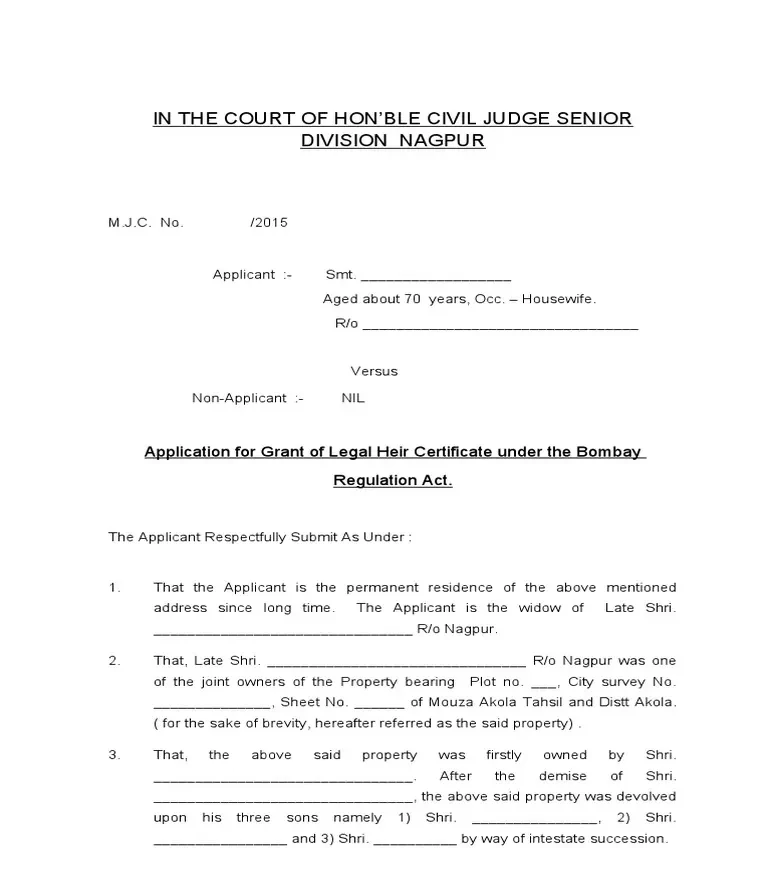
If you have applied for the Legal Heir Certificate online, you can usually download it directly from the state's e-District portal.
You can check the status of your Legal Heir Certificate application through the same portal where you applied.
Connect with Startupease and let our experts handle
the legal hassle while you grow your business.