Read More
India has emerged as one of the most promising destinations to invest in startups, driven by rapid digital growth and a large, young population. As per the Ministry of Commerce &...
Register your property sale deed online for secure ownership transfer. Startupease’s experts ensure smooth registration with 100% legal compliance under Indian property laws.
 Secure Sale Deed RegistrationExpert Legal Drafting & VerificationQuick Turnaround with End-to-End SupportFull Legal Compliance AssuredTrusted by Thousands of Property Owners
A Sale Deed is a legal document that officially records the sale and transfer of ownership of an immovable property (such as land, a house, or a flat) from a seller to a buyer. It is executed after both parties have fulfilled all conditions outlined in the Sale Agreement.
This document serves as definitive proof of your property ownership. Essentially, it's the final and most important step in establishing legal title. A properly executed and registered sale deed is paramount for any property transaction.
Sale deed registration is a crucial legal process that finalises the transfer of property ownership from the seller to the buyer. It involves documenting the transaction with the local sub-registrar office, ensuring that the buyer’s rights are officially recorded and recognised under the law.
This process offers legal protection by serving as conclusive proof of ownership and preventing future disputes or claims over the property. Once registered, the sale deed becomes a legally binding document, making it essential for any real estate transaction in India.
A registered sale deed is also necessary to update the property records (mutation) in the buyer’s name with the local revenue authorities. Without it, the buyer won’t be officially recorded as the new owner. It’s also a key document required by banks and financial institutions when applying for a home loan.
It's common to confuse a Sale Deed with a Sale Agreement, but they serve distinct purposes in a property transaction.
| Aspect | Sale Agreement | Sale Deed |
| Definition | A legal contract that outlines the terms and conditions of a future property sale. | A legal document that completes the transfer of ownership from seller to buyer. |
| Purpose | To promise a future sale after agreed-upon conditions are met. | To legally transfer ownership rights immediately after payment is made. |
| Nature | Executory (promise to transfer) | Executed (actual transfer) |
| Timing | Signed before the actual sale takes place | Signed after all terms in the sale agreement are fulfilled |
| Ownership Transfer | Does not transfer ownership | Transfers legal ownership of the property |
| Registration Requirement | Not mandatory, but strongly recommended | Mandatory under the Registration Act, 1908 |
| Legal Value in Court | Used to establish intent and terms of the deal | Treated as final proof of ownership and property rights |
| Document Role | Base document to prepare for registration or final sale | Final document to confirm and record the sale with the registrar |
| Legal Risk | Limited legal rights; ownership remains with the seller | Full legal protection and enforceability for the buyer |
| Stamp Duty | Usually lower or not required (varies by state) | Stamp duty is mandatory and paid at the time of registration |
| Use in Disputes | Helps prove intent to sell or buy | Conclusive evidence in title or ownership disputes |
| Cancellation | Can be cancelled mutually or by legal process if conditions are not met | Needs legal procedure and registrar approval for cancellation |
Often, the terms "Sale Deed" and "Conveyance Deed" are used interchangeably, and for most practical purposes, they refer to the same document in the context of a property sale.
| Aspect | Sale Deed | Conveyance Deed |
| Definition | A legal document that records the sale and transfer of ownership of property from seller to buyer. | A broader legal document that conveys the title of property from one party to another, including by sale, gift, exchange, or mortgage. |
| Scope | Specific to a sale transaction only. | Covers all types of property transfer (sale, gift, lease, mortgage, etc.). |
| Nature | Part of conveyance deeds, but only when the transfer involves a sale. | An umbrella term that includes various types of title transfer deeds. |
| Ownership Transfer | Transfers ownership through sale only. | Transfers ownership through any legal mode, not just sale. |
| Parties Involved | Buyer and Seller. | Transferor (could be seller, donor, etc.) and Transferee (buyer, donee, etc.). |
| Use Case | Used when a property is sold and full payment is made. | Used in multiple scenarios, including sale, gift, lease, exchange, and mortgage. |
| Registration Requirement | Mandatory under the Registration Act, 1908. | Also mandatory under the Registration Act, 1908, depending on the type of conveyance involved. |
| Legal Standing | Conclusive proof of sale and transfer of property. | Conclusive proof of any type of ownership transfer. |
| Stamp Duty | Stamp duty is paid as per the sale value of the property. | Stamp duty varies depending on the type of conveyance. |
| Examples | Selling a flat from one individual to another. | Includes Sale Deed, Gift Deed, Lease Deed, Relinquishment Deed, etc. |
| Governing Law | Transfer of Property Act, 1882, and Registration Act, 1908. | Also governed by the Transfer of Property Act, 1882, and relevant state laws. |
Here's a concise breakdown of the eligibility for Sale Deed Registration:
A comprehensive Sale Deed typically includes:
Both parties have crucial roles to play to ensure a smooth sale deed registration.
While specific requirements might vary slightly by state, generally, you will need:
| Document | Purpose |
| Sale Agreement (if executed earlier) | Shows mutual consent and terms agreed between the buyer and seller before final registration. |
| ID Proof of Buyer and Seller | To verify identity, accepted documents include the Aadhaar Card, PAN Card, Passport, and Voter ID. |
| Address Proof of Buyer and Seller | Confirms residential address; includes utility bills, Aadhaar, Passport, etc. |
| PAN Card of Buyer and Seller | Mandatory for property transactions exceeding Rs. 5 lakh for income tax compliance. |
| Passport-size Photographs | Needed for affixing to the sale deed and registration records. |
| Original Title Deed of the Property | Proves ownership of the seller; necessary to validate legal right to sell. |
| Previous Sale Deeds (Chain of Documents) | Required to establish a clear title and ownership history of the property. |
| Encumbrance Certificate (EC) | Confirms that the property is free from any legal dues or liabilities. |
| Khata Certificate & Extract (if applicable) | Indicates property is assessed for taxes in the buyer’s name post-registration and is state-specific. |
| Latest Tax Receipts (Property Tax) | Confirms no pending dues on the property. |
| Occupancy Certificate/Completion Certificate | For constructed properties, ensure legal construction and occupancy. |
| NOC from Society or Builder (if applicable) | Especially needed in apartments or housing societies. |
| Power of Attorney (if applicable) | If someone is signing on behalf of the owner/seller, a registered POA must be submitted. |
| Stamp Duty and Registration Fee Receipt | Proof of payment of government charges before registration. |
| Bank Loan Documents (if under mortgage) | Needed if the property is under a loan; a bank NOC may also be required. |
Drafting a Sale Deed requires precision and legal expertise. Here's a general outline:
Before drafting, collect all necessary details from both the buyer and seller, and about the property. This includes:
It is highly recommended to engage an experienced legal professional (advocate or deed writer) to draft the Sale Deed.
Their expertise ensures the document is legally sound, covers all necessary clauses, and complies with relevant laws like the Transfer of Property Act, 1882, and the Indian Stamp Act, 1899. In certain states, if you're not hiring a private lawyer, licensed government-approved deed writers are also permitted to draft the document.
The legal professional will prepare the first draft of the Sale Deed based on the information gathered in Step 1. This draft will typically include:
Both the buyer and the seller, along with their respective legal advisors, must meticulously review the initial draft.
Once all parties approve the draft, the Sale Deed is finalized.
In several states like Delhi, Rajasthan, and Maharashtra, women enjoy reduced stamp duty rates compared to men, making it more cost-effective to register the property in a woman’s name. This is to prevent undervaluation of property to evade stamp duty.
Registering your sale deed is a mandatory final step. Here is the process to follow:
Contact a professional and get help getting your sale deed registered.
Once a Sale Deed is properly registered, it remains valid indefinitely as proof of ownership.
| Aspect | Details |
| Validity of Registered Sale Deed | Lifetime validity — once registered, it remains legally valid permanently unless cancelled by a court. |
| Registration Timeline | Must be registered within 4 months from the date of execution (as per the Registration Act, 1908). |
| Late Registration Grace Period | Can be extended by another 4 months with payment of a penalty (subject to the registrar’s discretion). |
| Ownership Transfer Timeline | Ownership is considered transferred on the date of registration, not execution. |
| Mutation Timeline After Sale | Typically, 15–30 days after registration (varies by state), to update land revenue and municipal records. |
| Encumbrance Certificate Update | Reflects the sale deed details usually within 30–60 days post-registration. |
| Record Retention Period | Sub-registrar offices keep physical and digital copies indefinitely as public records. |
Once your sale deed is registered:
Losing your sale deed can be alarming, but it's not the end of the world. Here's what you should do:
A sale deed can be cancelled under specific circumstances, usually involving:
While there's no single universal format, a Sale Deed generally follows a standard legal structure.
| Section | Details/Content |
| 1. Title | SALE DEED |
| 2. Date and Place | Date: ___________ Place: ___________ |
| 3. Parties | Seller: Name, Address, Age, Occupation
Buyer: Name, Address, Age, Occupation |
| 4. Recitals | Background details of the property and agreement |
| 5. Consideration | Total sale consideration amount in words and figures |
| 6. Description of Property | Complete details of the property, including location, boundaries, measurements, and registration details |
| 7. Transfer Clause | Seller transfers ownership and possession to Buyer |
| 8. Payment Clause | Details about payment made or to be made by the Buyer |
| 9. Possession Clause | Date and manner of possession delivery to Buyer |
| 10. Seller’s Warranties | Seller guarantees a clear title and no encumbrances |
| 11. Indemnity Clause | Seller indemnifies Buyer against future claims |
| 12. Dispute Resolution | Jurisdiction and arbitration clause |
| 13. Execution | Signatures of Seller, Buyer, and Witnesses |
| 14. Registration Details | Details of deed registration (if applicable) |
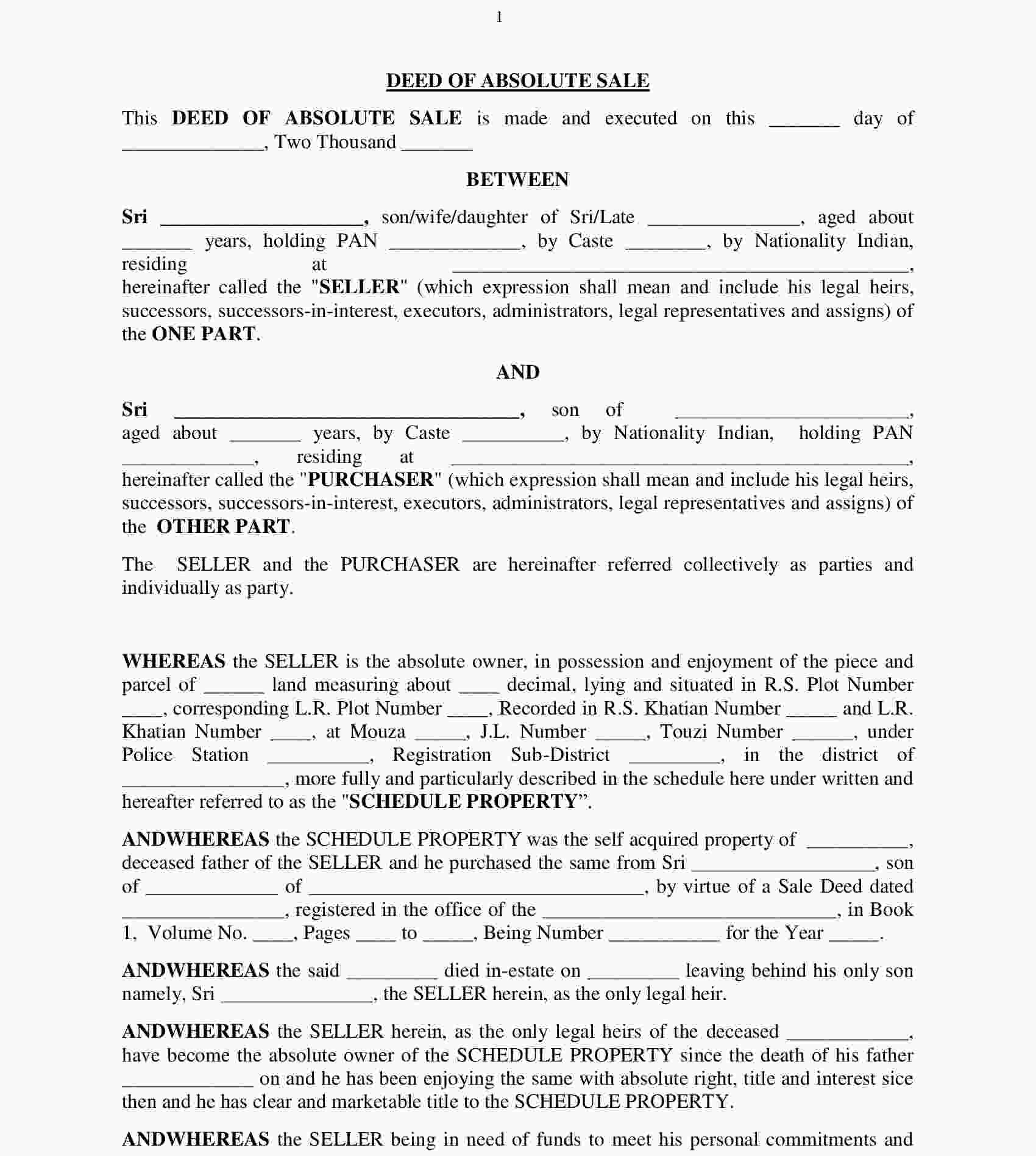
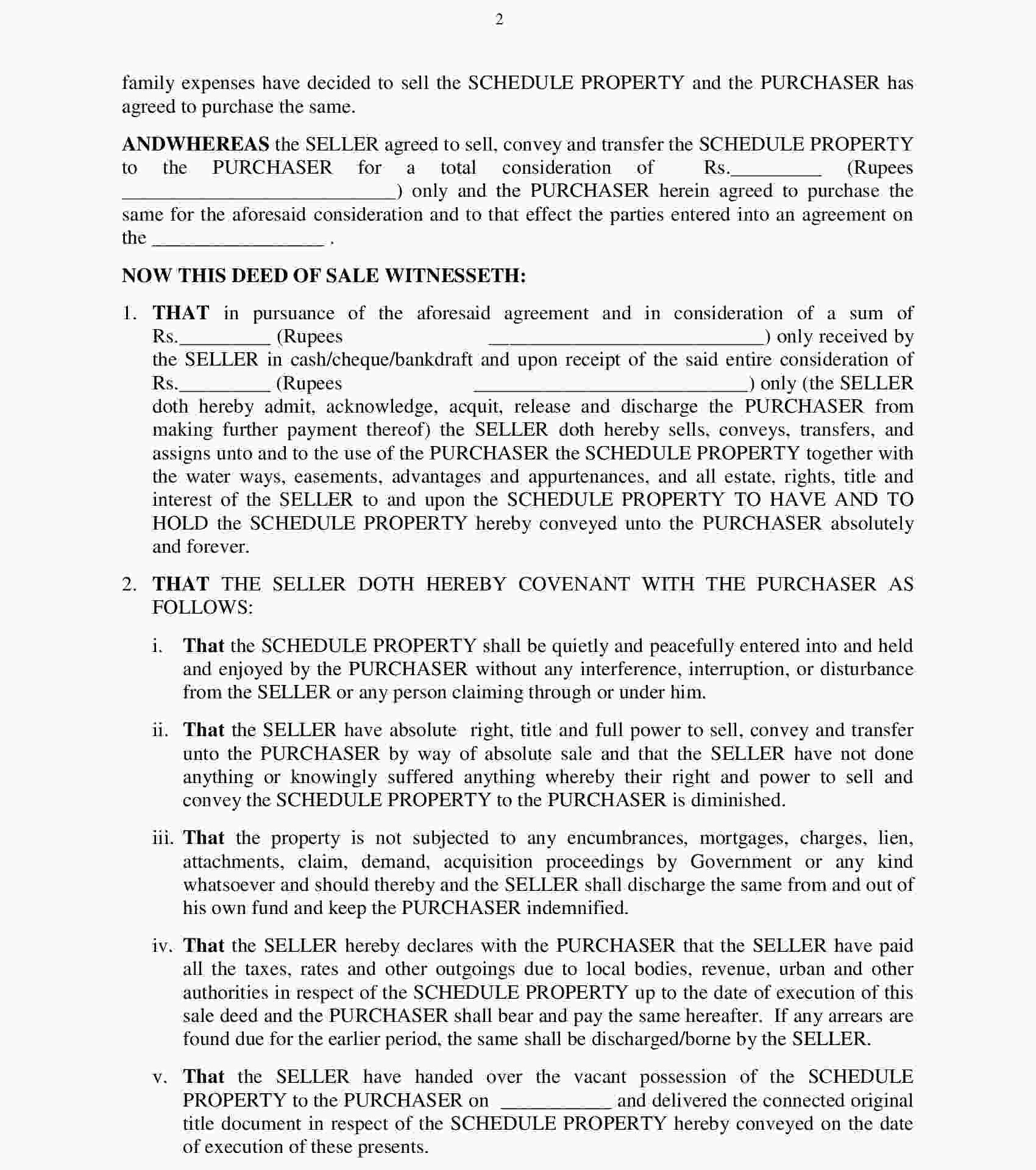
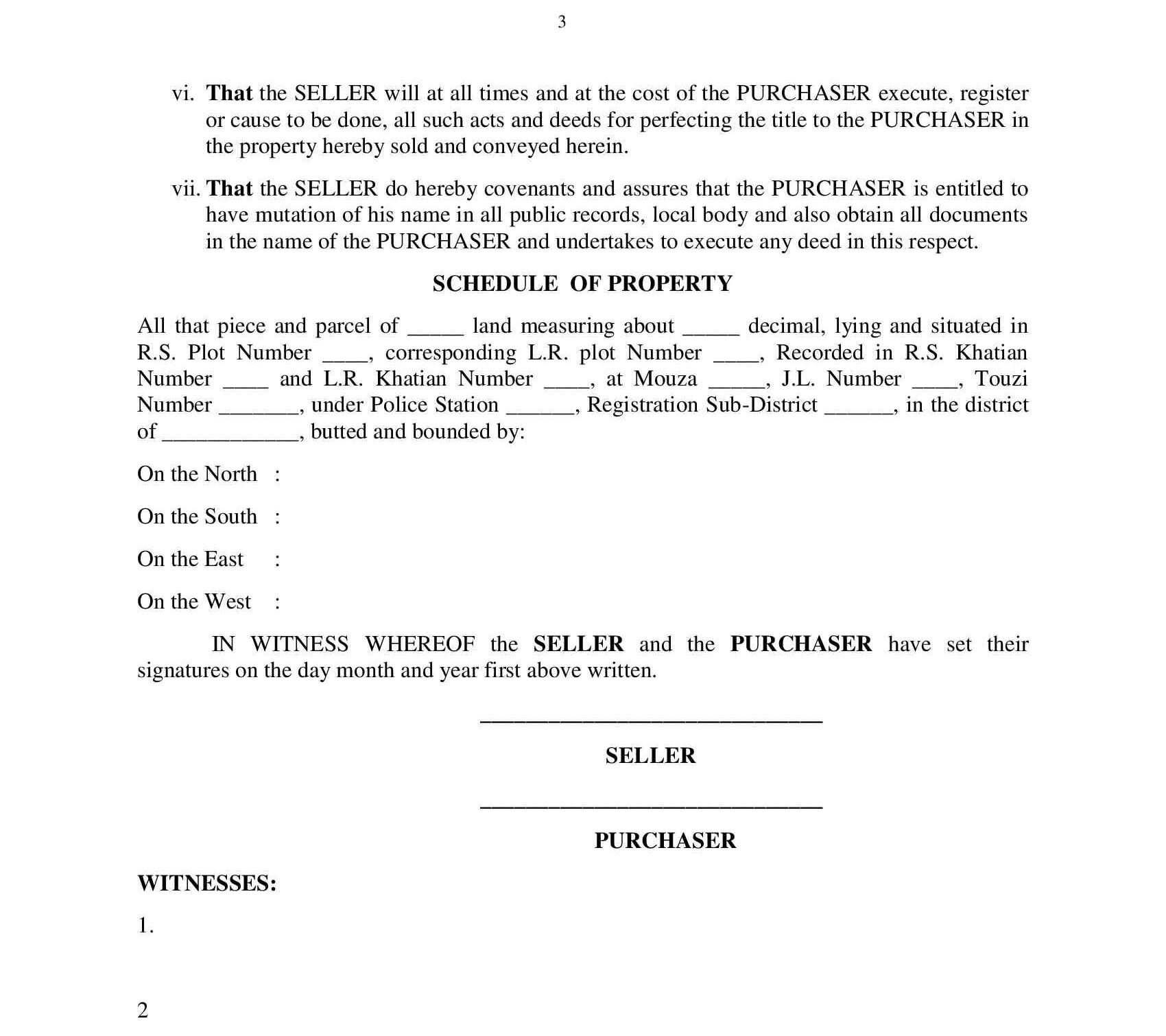
A Sale Deed Number is a unique identification number assigned to a registered sale deed by the sub-registrar’s office. It helps in tracking and retrieving property transaction records from official government databases and ensures that the sale deed is valid and legally recorded.
This number is essential when verifying ownership, applying for loans, or checking property details online. It can typically be found on the first page of the registered sale deed document and is required when downloading the deed or checking its registration status on state land record portals.
Follow these steps to access your registered deed through your state’s official portal:
To check the status online:
Connect with Startupease and let our experts handle
the legal hassle while you grow your business.