
Read More
India has emerged as one of the most promising destinations to invest in startups, driven by rapid digital growth and a large, young population. As per the Ministry of Commerce &...
Set up your company in Dubai with complete online support from India. We handle trade licenses, visas, and bank accounts so you can start and grow your business confidently today.

Dubai has emerged as a global business hub, drawing the attention of Indian entrepreneurs eager to expand their footprint internationally. With its investor-friendly ecosystem, tax advantages, and strategic location, Dubai offers unmatched opportunities for growth and global market access.
Setting up a company in Dubai means more than just a business address; it’s a gateway to world-class infrastructure, zero income tax, and a streamlined regulatory environment. Whether you're launching a startup, scaling an SME, or establishing a multinational entity, Dubai caters to every ambition.
Free Zones or Mainland? You have options to operate a business within Dubai.
Dubai offers both Free Zone and Mainland company setups, each with unique benefits:
When registering a company in Dubai, choosing the right jurisdiction is key. The three main options are Mainland, Free Zone, and Offshore—each suited to different business goals and offering distinct advantages.
Mainland companies are registered with Dubai’s Department of Economy and Tourism (DET) and can operate across the UAE.
Key Benefits:
Note: While most activities now allow 100% foreign ownership, some professional services may still require a Local Service Agent (LSA).
Free Zone companies are registered in specialized economic zones, ideal for international business and specific industries.
Key Benefits:
Popular Free Zones for Indians:
Offshore companies (e.g., JAFZA Offshore, RAK ICC) are set up for international operations and cannot trade within the UAE.
Key Benefits:
Offshore setups are popular among Indian investors for owning assets, managing global consulting, and estate planning.
Offshore companies typically have lower registration fees compared to mainland or free zone entities due to minimal physical presence requirements.
| Feature | Mainland Company | Free Zone Company | Offshore Company |
| Market Access | Full access to the UAE market and government contracts | Mainly international markets; limited UAE trade (via distributor/agent only) | No business allowed within the UAE; for international operations only |
| Foreign Ownership | 100% permitted in most sectors (since 2021 reforms) | Always 100% foreign ownership | 100% foreign ownership |
| Office Requirement | Mandatory physical office (Ejari lease) | Flexi-desk, virtual office, or physical office options, depending on the Free Zone | No physical office required |
| Local Sponsor/LSA | Not needed for most businesses; LSA may be required for select professional services | Not required | Not required |
| Corporate Tax | 0% up to AED 375,000; 9% thereafter (subject to conditions) | Usually 0%, but 9% applies if substance rules are not met | Generally 0% (depends on the source of income and structure) |
| Customs Duty | Applicable to imports | No customs duty within Free Zones | Not applicable (no UAE trade) |
| Audit Requirement | Annual audit mandatory | Varies—many Free Zones require audits; some exempt SMEs | Usually not required |
| Cost (Estimated) | Higher setup and recurring costs (licenses, office, visas) | Often more cost-effective, depending on the Free Zone and business type | Lowest cost setup; ideal for asset holding or international trade |
| Visa Quota | Based on the size of the physical office (Ejari) | Varies by Free Zone package | Not eligible for UAE residence visas |
| Ideal For | Businesses targeting the UAE market, hiring staff, or bidding for government projects | Startups, SMEs, and industry-specific businesses focused on global markets | Asset protection, international trading, holding structures, and wealth management |
Registering a company in Dubai from India is now easier than ever, with streamlined processes encouraging foreign investment. While specifics can vary slightly between mainland and free zone setups, the core steps remain consistent. Here is the step-by-step procedure on how to register your company in Dubai:
Before anything else, you must clearly define the exact business activities your company will undertake. The Department of Economy and Tourism (DET) for mainland companies, or the respective Free Zone Authority, has a comprehensive list of approved activities. Your chosen activity will directly determine:
When forming a business in Dubai, choosing the proper legal structure is crucial, not just in free zones but also on the mainland and offshore. Each offers distinct advantages based on your business activities, market reach, liability concerns, and long-term objectives.
You must reserve a unique trade name for your company. The name must comply with the UAE's naming conventions, which include:
You'll submit your preferred names (usually 3-5 options) to the DET or Free Zone Authority for approval.
Identifying a suitable physical location is fundamental for your business in Dubai, directly influencing your license approval and operational flexibility.
With your company name reserved and business location secured, applying for the actual business license is the next pivotal stage.
For certain regulated activities, this stage may also involve securing preliminary No Objection Certificates (NOCs) from specific external government departments.
This typically involves:
For foreign investors and their employees, securing valid residency visas is imperative to legally reside and work in Dubai.
The Emirates ID is a mandatory national identity card for all UAE residents and citizens.
Establishing a corporate bank account is a critical step for managing your business finances in Dubai.
Establishing a robust financial management system from the outset is crucial for compliance and business health.
This comprehensive, step-by-step process provides a clear roadmap for successfully opening and operating a company in Dubai.
The document requirements for company registration in Dubai for Indian citizens are straightforward, but accuracy and proper attestation are crucial. Having these ready in advance will significantly speed up your company registration process.
To complete the registration process, you will need the following documents:
If an existing Indian company is a shareholder in the new Dubai entity, additional corporate documents are required:
Document attestation means getting your papers officially verified so they’re accepted when registering a company in Dubai.
It's a multi-stage process that authenticates the documents for use in the UAE:
The cost of company registration in Dubai varies significantly depending on the chosen jurisdiction (mainland, free zone, or offshore), the type of business activity, the legal structure, the number of visas required, and the office space chosen. Understanding both one-time and annual recurring costs is essential for accurate budgeting.
The one-time setup costs for company registration in Dubai typically include fees and other administrative expenses, as follows:
The annual recurring costs for maintaining a company in Dubai include renewals and other operational expenses, as follows:
Please note these are estimates and can vary widely based on specific choices, free zone, activity, and market conditions.
These estimates usually cover license, registration, office, and initial visa processing for one investor. Factors like multiple shareholders, additional visas, larger office spaces, or specialized activity approvals will increase the overall Dubai company registration fees. Always get a precise quote from your chosen consultant.
A Company Registration Certificate is a crucial document that validates your business's legal existence in Dubai. It confirms that your company has been officially registered with the relevant government authorities, allowing you to operate within the UAE's regulatory framework.
This certificate is essential for opening bank accounts, signing contracts, and obtaining licenses, making it a foundational step for any business in Dubai.
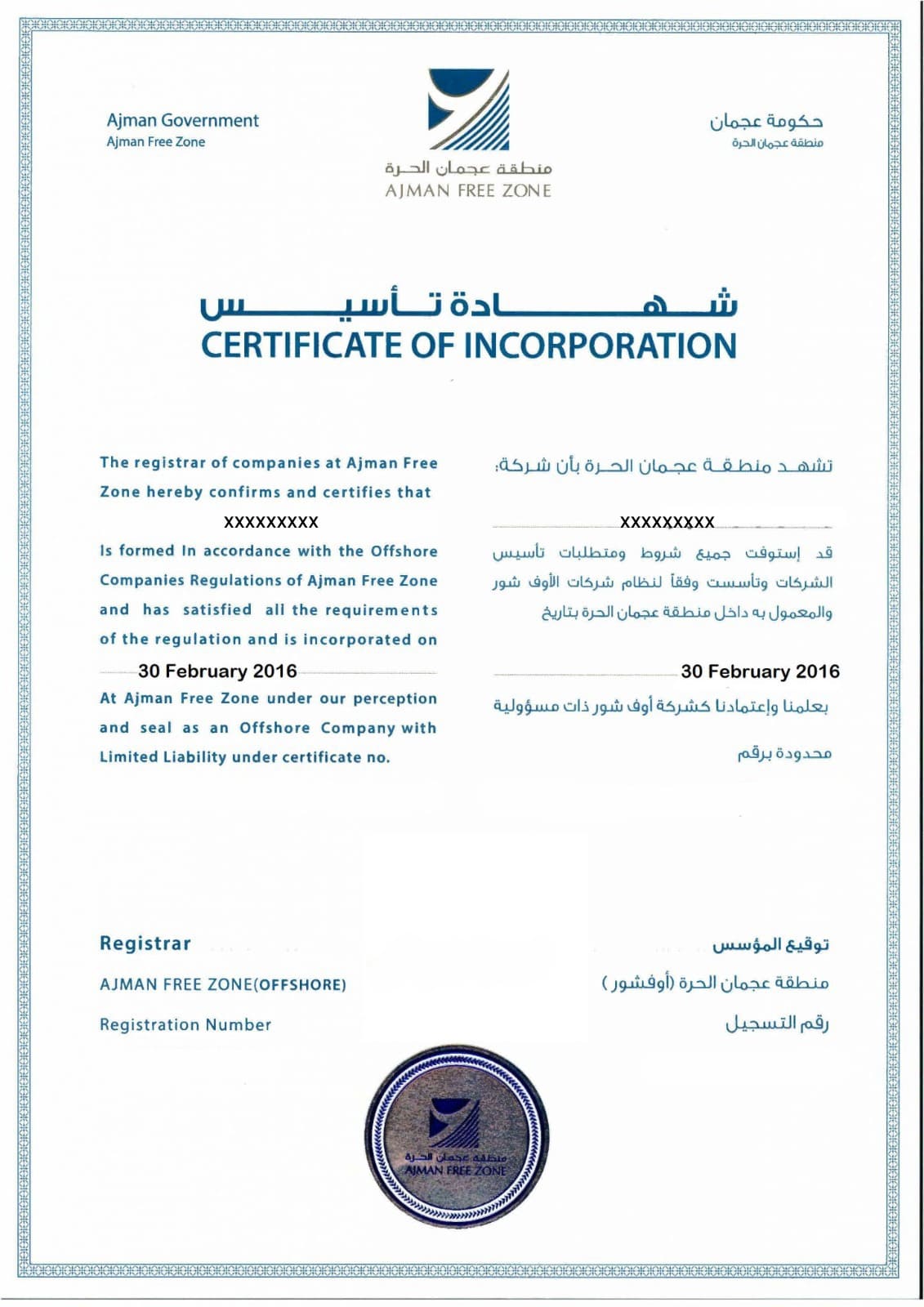
The specific steps to download a certificate will depend on which certificate you need. Here are common scenarios:
i) For mainland companies, this is typically issued by the Department of Economic Development (DED) in Dubai (now known as Dubai Economy and Tourism - DET).
ii) For Free Zone companies, the certificate is issued by the respective Free Zone Authority (e.g., DMCC, JAFZA, DAFZA, etc.).
To check the registration status of a company in Dubai, you primarily use government online portals. There isn't one single "master" registry for all of the UAE, as companies are registered with different authorities depending on their legal structure and location (mainland vs. free zone).
Here are the ways to check a company's registration status:
A. For Mainland Companies:
B. Free Zone Authority Portals - For Free Zone Companies:
C. National Economic Register (NER) - Ministry of Economy:
D. Federal Tax Authority (FTA) - EmaraTax Portal:
Complete your company setup and receive your trade license from the relevant Dubai authority. Apply for your UAE residency visa, which allows you to legally live and work in the country.
As an owner or partner in a newly registered Dubai company, you are eligible to apply for a UAE Investor or Partner Visa. This visa allows you to legally reside and work in the UAE.
Once you have your investor visa, you can sponsor your family members (spouse, children, and sometimes parents) for their residency visas. Your company can also sponsor visas for your employees. The number of employee visas you can obtain often depends on your office space (for mainland companies) or your chosen free zone package.
The UAE offers a Golden Visa program, which is a long-term residency visa (5 or 10 years) for individuals who meet specific criteria, including entrepreneurs. For entrepreneurs, this often involves investing a certain amount in a local company (e.g., AED 500,000 for a 5-year visa or AED 2 million for a 10-year visa, or meeting specific business revenue/asset criteria). The Golden Visa provides greater stability and benefits, making it an attractive option for serious investors in Dubai.
Opening a corporate bank account is essential for managing your business finances in Dubai.
Dubai has a robust banking sector with numerous local and international banks. Consider factors like:
Indian entrepreneurs might face a few challenges when opening a corporate bank account:
How to overcome:
Company registration in Dubai is just the beginning. To ensure the longevity and legal standing of your business, it's crucial to understand and adhere to ongoing compliance requirements in the UAE.
The UAE introduced a Value Added Tax (VAT) at a standard rate of 5% in January 2018.
As mentioned earlier, the UAE introduced a Corporate Tax law, effective for financial years starting on or after June 1, 2023.
Professional accounting services are highly recommended to ensure compliance with both VAT and Corporate Tax regulations after your company registration in Dubai.
To comply with local regulations, your business must adhere to the following annual auditing and bookkeeping requirements:
The Wage Protection System (WPS) is an electronic salary transfer system mandated by the Ministry of Human Resources and Emiratisation (MOHRE) in the UAE.
Dubai offers Indian entrepreneurs a strategic gateway to global markets, supported by key advantages such as tax benefits, business-friendly regulations, and a robust economy. Registering with the Dubai commercial register ensures legal recognition and access to these growth opportunities.
Dubai's geographical position is a game-changer for businesses aiming for global reach. Situated at the crossroads of major trade routes, it provides excellent connectivity through its world-class airports (like Dubai International Airport and Al Maktoum International Airport) and seaports (such as Jebel Ali Port).
This strategic location significantly reduces shipping times and costs for goods, making international trade incredibly efficient. For Indian entrepreneurs, this means easier access to vast consumer bases across the Middle East, Africa, and beyond. This strong logistical network makes company registration in Dubai a strategic move for any internationally focused venture.
One of Dubai's most compelling attractions for entrepreneurs is its favorable tax environment. The UAE has historically been known for its 0% personal income tax, meaning individuals keep all their earnings. This is a massive draw for business owners and employees alike.
Recently, the UAE introduced a Corporate Tax Law, effective for financial years starting on or after June 1, 2023. However, this is structured to remain competitive:
This tiered system ensures that the UAE remains highly attractive, especially for startups and growing businesses, by minimizing the tax burden on profits. When you consider the company registration fees in Dubai, the long-term tax benefits often outweigh the initial investment.
A significant legislative reform in the UAE has revolutionized company registration in Dubai. Previously, mainland companies required a local Emirati sponsor holding 51% ownership. However, amendments to the UAE Commercial Companies Law now allow 100% foreign ownership in most sectors across the UAE mainland.
This means Indian entrepreneurs can set up their businesses with complete control, without needing a local partner for equity. Free Zones have always offered 100% foreign ownership, making them highly appealing. This change further empowers international investors, giving them full autonomy over their ventures in Dubai.
Dubai boasts some of the most advanced infrastructure globally. This includes modern business parks, advanced communication networks, efficient transportation systems, and high-tech facilities across various sectors. This robust infrastructure supports seamless business operations and fosters innovation.
Furthermore, Dubai is home to a very large and thriving Indian expat community, which provides a familiar cultural environment, a strong talent pool, and a robust network for Indian entrepreneurs looking to start a business. This community support can be invaluable when navigating a new market after your company registration in Dubai.
Dubai consistently receives high rankings in global "Ease of Doing Business" reports, thanks to its streamlined processes, transparent regulations, and pro-business government policies. The government is committed to reducing bureaucracy and accelerating business setup. Adding to this appeal are the exceptionally strong bilateral ties between India and the UAE.
Both nations share significant trade, investment, and cultural connections, formalized by agreements like the Comprehensive Economic Partnership Agreement (CEPA). These strong relations foster a trusting environment, making it easier for Indian entrepreneurs to understand and navigate the company registration in the Dubai landscape.
Connect with Startupease and let our experts handle
the legal hassle while you grow your business.