Read More
India has emerged as one of the most promising destinations to invest in startups, driven by rapid digital growth and a large, young population. As per the Ministry of Commerce &...
Update your LLP Agreement with ease. Startupease ensures MCA-compliant changes, whether it's business terms, roles, capital, or address, with expert guidance and seamless form filing.
 Drafting & Amendment of LLP AgreementPartner Resolution & Consent HandlingFiling of Forms LLP-3 & LLP-4 (if needed)Expert Support for Address, Capital, or Role ChangesQuick, Hassle-Free ROC Approval Process
Changing an LLP (Limited Liability Partnership) agreement involves updating the rules and terms that govern the partnership's operations. This is important when there are changes in the business, ownership, or management. The process involves identifying the necessary amendments, drafting the new clauses, securing partner approval, and filing the updated agreement with the Registrar of Companies (ROC).
Here are a few common changes that usually take place in an LLP:
Changes to an LLP agreement are made to keep it current with the evolving needs of the business and its partners. Some common reasons include:
Before shifting the registered office of a Limited Liability Partnership (LLP), certain legal and procedural aspects must be carefully reviewed to ensure compliance and avoid disruptions in operations.
An LLP agreement is made up of several important clauses that define how the partnership operates, manages responsibilities, and handles financial and legal matters between partners.
This section contains the main details about the LLP and its partners.
Here, the agreement defines how finances will be managed, right from capital contributions to profit-sharing arrangements.
This section talks about what each partner can and cannot do, and how the LLP will be managed.
Every business changes over time—this part provides guidelines for partner changes, dispute handling, and closure.
This section includes extra rules to cover other essential business areas.
If you want to make changes to an existing LLP agreement, you will need to prepare and submit the following documents:
These documents are required to update the LLP agreement officially:
These documents are needed if there are changes related to the partners:
A Limited Liability Partnership (LLP) Agreement is a crucial legal document that outlines the framework of how an LLP will function. It includes essential details such as business objectives, partner roles, responsibilities, profit-sharing ratios, and other operational terms. As the business grows or circumstances change, it may become necessary to update this agreement.
The first step in modifying an LLP Agreement is to hold a formal meeting with all existing partners. During this meeting, the proposed changes should be discussed and reviewed. Once all partners agree to the modifications, a resolution must be passed to approve the changes. It is important to record this resolution in the meeting minutes and ensure unanimous consent or majority approval as specified in the original LLP Agreement.
After passing the resolution, the next step involves drafting a Supplementary LLP Agreement. This document should clearly outline all the changes being made to the original agreement, such as alterations in business structure, responsibilities, or capital contributions. The supplementary agreement acts as an addendum, legally binding once executed, and should reflect the updated terms in a precise and unambiguous manner.
Once the supplementary agreement is ready, it must be signed and executed by all the partners to give it legal validity. Additionally, the document must be stamped as per the applicable stamp duty regulations in your respective state. Proper execution also includes having the agreement witnessed by at least two individuals. This step ensures that the document is legally enforceable and acceptable to regulatory authorities.
Within 30 days of passing the resolution, the LLP is required to file Form LLP-3 with the Registrar of Companies (RoC) through the Ministry of Corporate Affairs (MCA) portal. This form must include the signed resolution and the supplementary LLP agreement as attachments. Filing Form LLP-3 officially informs the RoC about the changes and ensures that the modifications are legally recognized.
If the changes involve the appointment, removal, or modification of details related to a partner or designated partner, then Form LLP-4 must also be filed in conjunction with Form LLP-3. This form captures key information about the individual or corporate entity being added or removed, including their name, address, and role within the LLP. It is mandatory to file Form LLP-4 whenever there is any alteration in partner-related details to ensure the official records are updated accurately.
Once all required forms are submitted, the Registrar of Companies will review the documentation. If everything is found in order, the RoC will approve the changes and update the LLP records accordingly. An acknowledgment receipt will be generated, and the revised LLP Agreement will now be legally valid. It is advisable to store a copy of the updated agreement and the approval acknowledgment for future compliance or legal reference.
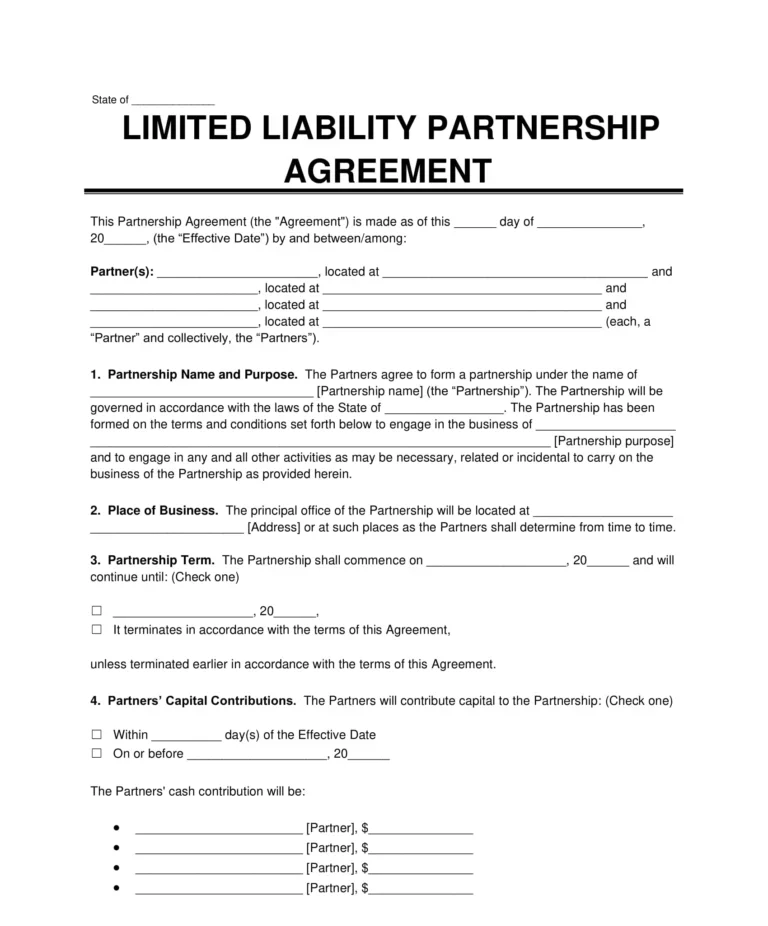
A Supplementary LLP Agreement is a legal document used to record any changes or modifications made to the original LLP Agreement. This could include changes such as the addition/removal of partners, changes in capital contribution, profit-sharing ratio, business activities, or any other key clauses. It must be drafted carefully and filed with the MCA by submitting Form 3 within 30 days of such a change.
Below is a standard format for a Supplementary LLP Agreement:
Connect with Startupease and let our experts handle
the legal hassle while you grow your business.